




Technical
Social platform (Us)
Connection without a feed, an audience or a performance. Fewer people, known better.
The feed was built to keep you here. It worked. Platforms learned you well enough to hold your attention for hours, then sold it.
Meanwhile, close friendship thinned out. In 1990, 3 per cent of Americans had no close friends. By 2024 it was 17 per cent (Survey Center on American Life). The feed isn’t the only cause. But a platform that measures time spent will never see the problem: a lonely evening scrolling is a good day for the metric.
Us, algn’s social platform, asks a different question: who is worth your time, and would they want to hear from you?
Matched on what you’re exploring
Not a profile. Not interests you ticked on day one. In Us, you’re matched on what you’re actually exploring with Sera, without anyone seeing the conversations behind it.
Most platforms already know you well enough to hold your attention. They use it to keep you. The same understanding can be pointed the other way.
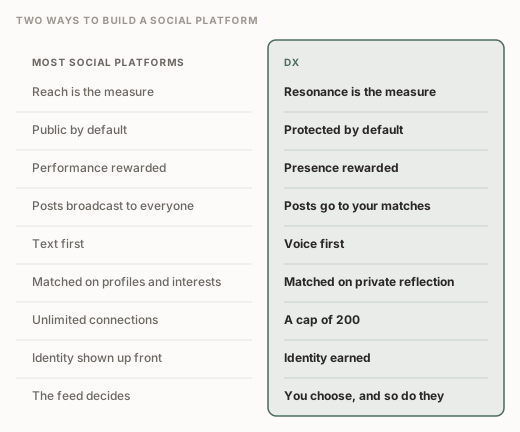
How you meet someone
Nobody is shown a stranger’s inner life. When there’s a match, you see why from your own memory, on your device. The other person is shown nothing: not why, and nothing about you. Nothing about them is shown to you either. Send a voice note or message if you want to. They see only what you send, and decide whether to answer. If they don’t, you’re never told.
Health, sexuality, trauma, money and more are stripped out on your device before matching. You approve what’s left.
Identity is earned
Everyone starts masked: a voice, their words and a chosen colour. Names and faces come later, after a real exchange, and only if you both choose.
Fewer connections, on purpose
A cap of 200, just above the roughly 150 relationships people can keep up. Untended connections fade, with warning. What stays is what you keep choosing.


A connection that lasts is one someone keeps choosing.
The lines we drew
- Nobody buys reach. No ads. No paying for attention, a better Drop or a seat.
- Your attention isn’t the product. Nothing to scroll. No time-spent targets.
- No audience. Your posts go to your matches. No follower counts.
- Consent before contact. Nobody reaches you unless you answer.
- Private stays private. Sensitive topics are never matched. We can’t read your messages, even to handle a report.
- People first. Search by name to find friends and family already here.
What Us does
- Matches you on patterns from private reflection
- Shows you why, from your own memory
- Lets the other person decide
- Keeps names and faces back until earned
- Caps connections and lets untended ones fade
- Encrypts messages end to end
- Lets you find friends and family by name
What it doesn't
- Show you a feed
- Show anyone your inner life
- Match on health or sensitive topics
- Tell someone you ignored them
- Read your messages, even for a report
- Broadcast your posts beyond your matches
- Sell attention or let anyone buy reach
You’re never shown who someone is before they choose to show you. Neither are they.
Meeting someone
Guarantees, not tuning. Thresholds, counts and timings stay private, so nobody can game them.
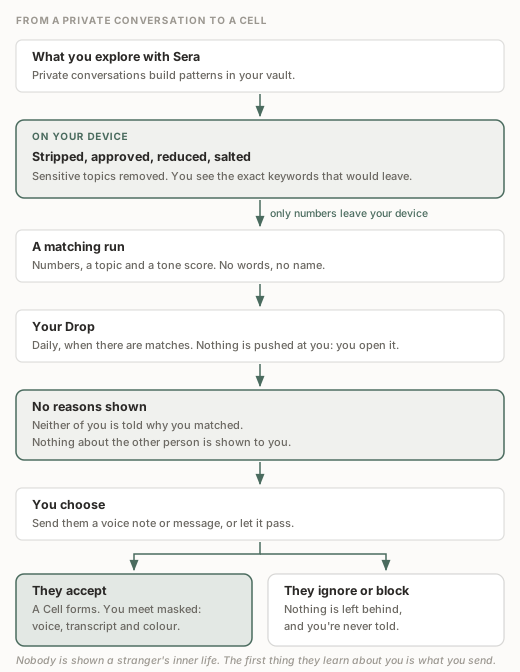
- Starts in private. Patterns from your conversations with Sera, not a profile. Sensitive topics are stripped on your device, you approve the keywords, and only salted numbers leave. Every layer is on the privacy page.
- Complementary, not identical. Someone further along what you’re facing, or just starting on what you know.
- The Drop. Daily, when there are matches. You open it. A few people, not a list.
- Your reasons stay yours. You see why you matched, from your own memory, on your device. The other person is shown nothing about you, only what you choose to send.
- First contact. A voice note or message. They accept, ignore or block. Accept, and a Cell forms. Ignore or block, and nothing is left. You’re never told which.
- Your controls. Pause matching, untick keywords or topics, and delete your matching data at any time.
- Other ways in. Posts from your matches, network-wide posts, live sessions and search.
Cells
Every relationship lives in a Cell of one to fifteen people. Notes to self, a pair or a small group, all under the same rules.
- Starts with a yes. A Cell forms when someone accepts your first message.
- Newcomers start clean. Anyone added later can’t see earlier history.
- Cells can merge. History doesn’t transfer.
Voice first
Tone, pace and hesitation say what text can’t. Every voice note has a transcript, and you can type instead, first messages included.
Each member picks a colour. You recognise people by it before you know a name or face.
Masked, then unmasked
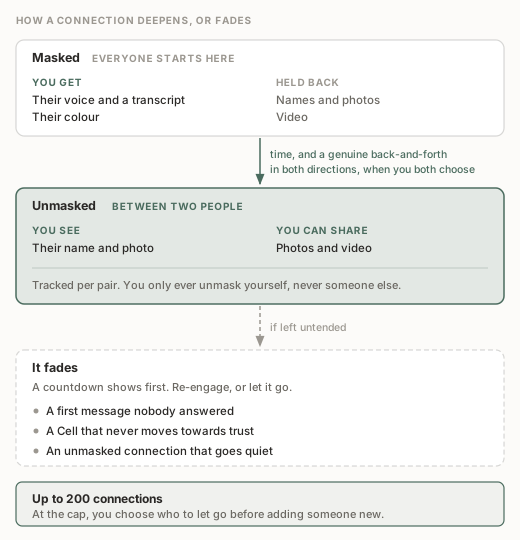
- Masked. Voice, transcript, colour. No names, photos or video.
- Unmasking. Takes time, a real back-and-forth, and both of you choosing. No rushing, no taking without giving. You only ever unmask yourself.
- Unmasked. Names and photos, and you can share photos and video.
- Per pair. Sharing a Cell isn’t trust. A new member starts masked to everyone.
You can only ever unmask yourself.
The cap and fading
- 200 connections. Just above the roughly 150 relationships people can keep up (Dunbar 1992; Dunbar 2016). At the cap, you choose who to let go.
- Fading. Unanswered first messages, Cells that never build trust and unmasked connections gone quiet all fade. A countdown comes first: re-engage or let go.
Posts and live sessions
- Your posts reach your matches. Never the whole network.
- Network-wide posts come only from Council and Stewards, levels earned, never bought. Replies stay masked.
- Gatherings are live video led by a Steward. Everyone else joins by voice, masked.
- Circles are smaller live sessions within a group.
Reply to the same post as someone, and you can reach out to them.
Search
Find friends and family by name. Reaching them still starts with a first message they choose to accept.
Between Sera and Us
Nothing from Us enters your memory automatically. You decide what does. No AI reads or summarises your Cells.
Safety
- 18+ only. Date of birth at sign-up. Under 18s are blocked.
- Block anyone, any time. Nothing is left behind.
- Report anyone. We get the report, never your messages. Repeated reports can mean a temporary or permanent ban.
Privacy in Us
Messages and voice notes are end-to-end encrypted: AES-256-GCM for content, RSA-OAEP for key exchange, private keys on your device. Our servers hold only ciphertext, and can’t read it.
We do hold your account, plus what’s needed to deliver messages and run fading, like who’s in a Cell and when. Full detail on the privacy page.
Standing, not spend
Us unlocks when your participation reaches Creator. It’s earned, never bought. This doesn’t happen in the demo.
Nobody can pay for reach, a better Drop or a Council or Steward seat. No ads. No data sales.
DX · HOW IT WORKS · Matched on patterns from private reflection, not profiles · Sensitive topics stripped on device; if unsure, left out · You approve the keywords; only salted numbers leave · The Drop: daily when there are matches, opened by you · No match reason shown to either side; only what you send · First contact: voice note or message; accept, ignore or block · Cells: 1 to 15 people, same rules at every size · New Cell members see no earlier history · Masked until trust is earned, tracked per pair · Cap of 200 connections; untended ones fade, with warning · Posts reach your matches; network-wide only from Council and Stewards · Messages end-to-end encrypted (AES-256-GCM, RSA-OAEP) · Reports reach us; messages never do
What we gave up
- Speed. Trust takes time.
- Richer matches. Whole areas of life are off limits. Less precise, and safe.
- Effortless connections. Untended ones fade.
- Reach. No audience to build.
- Oversight. We can’t read messages, even for a report. We act on what members tell us.
- Instant access. Us unlocks at Creator, not at sign-up.
Corrections
This page is stable. We don't expect it to change much, but we still fix what we get wrong. If a claim looks off or a source doesn't hold up, tell us below.